01
Problem
Paper, radios, walk-throughs, spreadsheets, and individual memory gave each role a partial view of the floor, but not a shared operational picture.
Read the chapterProduct systems / Confidential client work
Scan first.
Inspect second.
Analyze third.
A confidential operational product system that turns a small set of station events into a shared, role-aware view of what needs attention across a manufacturing floor.
Get the short versionAI-generated contextual reconstruction
My role
As Lead UX Designer at Big Room Technologies, I designed workflows and a shared design system for a manufacturing client.
My contribution
In progress
Production implementation, testing, adoption, and operational impact remain unverified.
01
Paper, radios, walk-throughs, spreadsheets, and individual memory gave each role a partial view of the floor, but not a shared operational picture.
Read the chapter02
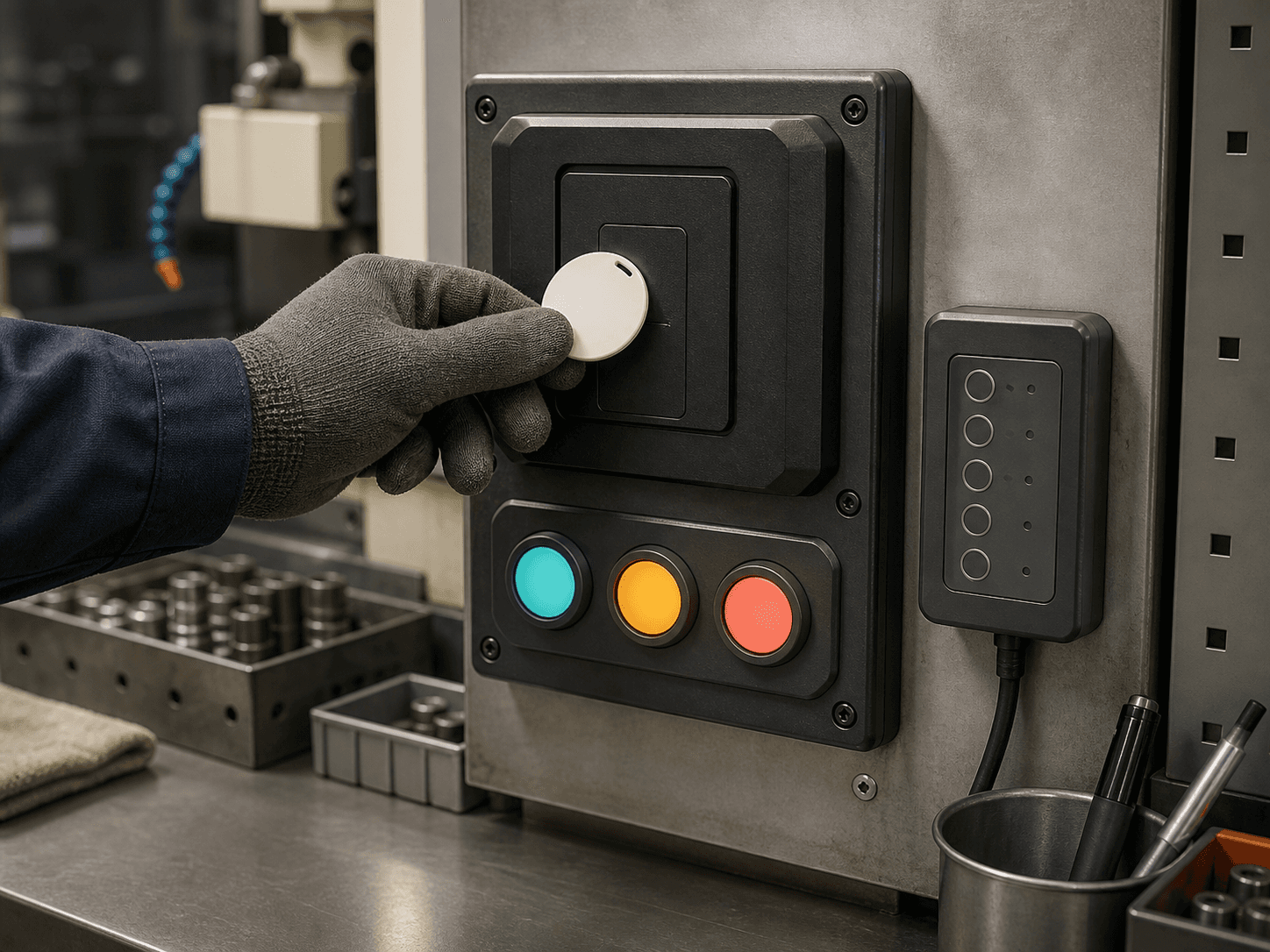
I started with what the product could know reliably: badge activity, Working / Idle / Down state changes, timestamps, and a reason only when a Down state needed context.
Read the chapter03
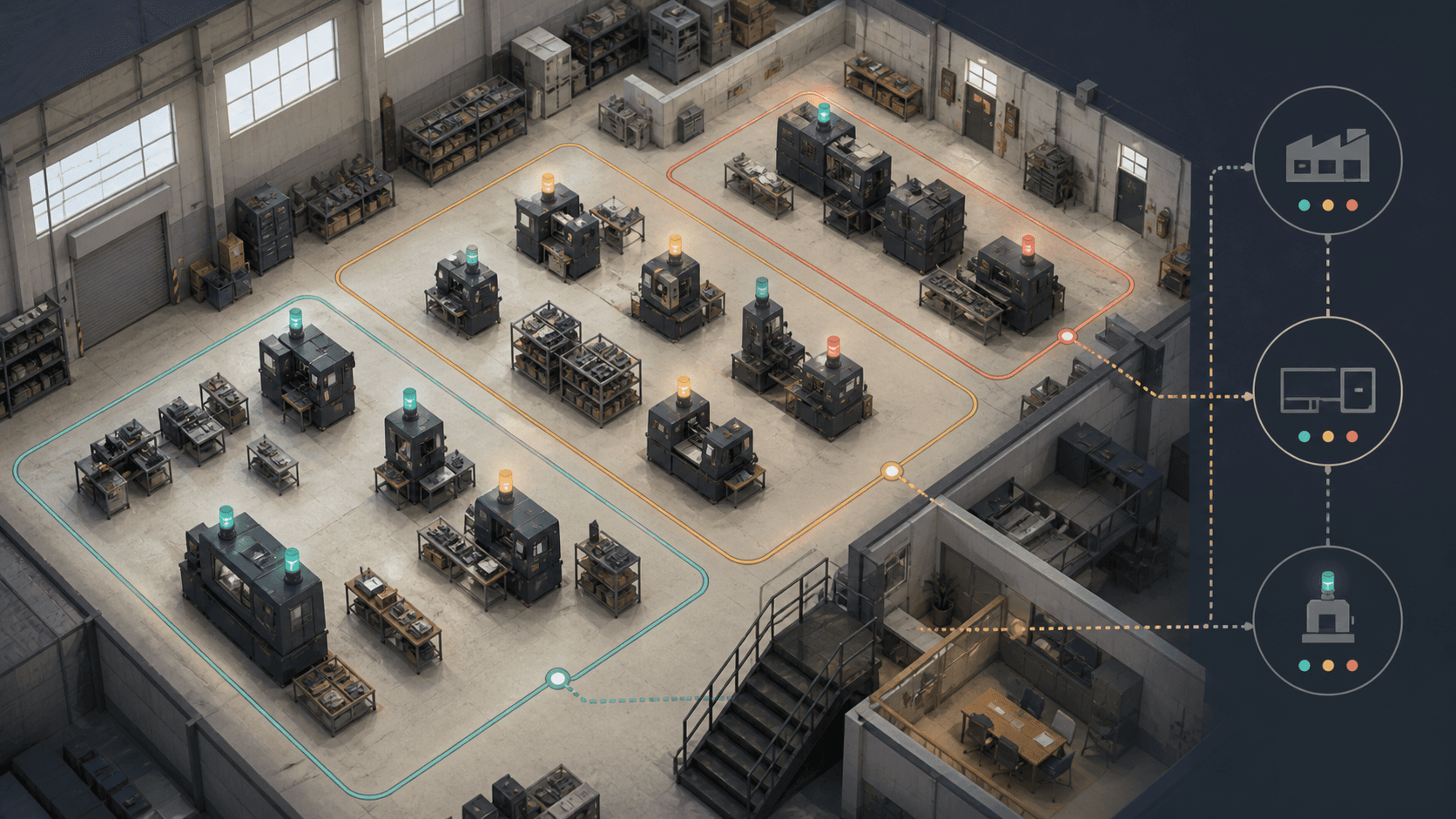
Those events roll from station to area to facility through one state language and one progressive path: scan first, inspect second, analyze third.
Read the chapter04
The work produced a confidential, in-progress product framework and high-fidelity prototypes for stakeholder alignment and developer handoff. Production use, testing, and measurable impact remain unverified.
Read the chapterThe guided story
At Big Room Technologies, a software agency, I design enterprise systems for a manufacturing client. This public reconstruction explains the design logic without exposing the client's screens, processes, or data. It is not a demonstration of the deployed software.
Operators, supervisors, and managers could each understand part of the floor through observation, radio calls, conversations, paper, spreadsheets, and memory. Those perspectives did not automatically become one trustworthy view of what was happening or where attention was required.
AI-generated contextual reconstruction
The product could depend on only a few events: badge activity, a station-state change, its timestamp, and a reason when a Down condition required explanation.
AI-generated contextual reconstruction
A station event creates the current state and interval history. Station conditions roll into area summaries, and area conditions roll into facility awareness while users retain a path back to the originating event.
RECONSTRUCTED SYSTEM DIAGRAM
Small reliable source signal
↓Current state and interval history
↓Conditions grouped in context
↓Shared awareness across areas
Conditions needing attention
Recent event record
Historical questions; unverified
↶ Each summary retains a path back to its source event
Managers begin with a facility-level scan, inspect an area or station without losing context, and open deeper history only when necessary. Each layer answers a different question instead of repeating every detail.
RECONSTRUCTED / ANONYMIZED INTERFACE
Recognize where attention may be needed
Review condition without losing context
Open deeper history only when necessary
Current condition, alerts, and recent activity support immediate work. Historical comparisons and trends belong in analysis. Separating them prevents every event from appearing urgent and keeps overview screens scannable.
RECONSTRUCTED SYSTEM DIAGRAM
Supports immediate operational attention.
Historical analysis is proposed and implementation remains unverified.
High-fidelity prototypes connected facility, area, station, operator, and administrative journeys while exposing unresolved behavior, terminology, ownership, and metric definitions for stakeholder review and developer handoff.
RECONSTRUCTED / ANONYMIZED INTERFACE
PROVISIONAL CONCEPT
What the work established
The work established a shared state model, connected facility-to-station hierarchy, role-aware workflows, progressive investigation, current-versus-historical separation, and reusable interaction patterns for stakeholder alignment and developer handoff. Its strongest demonstrated outcome is the product architecture itself—not a claim of production adoption or measured operational improvement.
Public visuals are reconstructed and anonymized. Exact production status, usability testing, adoption, and operational impact remain unverified, so this case study documents design judgment and system structure rather than client results.
Clarity starts with a shared language.
Keep exploring
SignalOS — a personal research tool for deciding what deserves a closer look.
Open to staff and lead product design roles, design engineering, and creative technology collaborations in Greater Boston and remotely.